Simon bolivar was the one who went to London to seek help for a revolution from the Spanish. he went to the United states to study their government. After he came back from the United States he gather an army to start a revolution for Independence. he lost some battles against the Spanish but he eventually won and gain Independence for Venezuela in 1821. He also gained Independence for Colombia,Ecuador, Panama,Bolivia and Peru. Simon Bolivar was so famous and everyone in south America and the country of Bolivia was named after him.
Thursday, October 22, 2009
Simon Bolivar and Latin American Revolutions
Simon bolivar was the one who went to London to seek help for a revolution from the Spanish. he went to the United states to study their government. After he came back from the United States he gather an army to start a revolution for Independence. he lost some battles against the Spanish but he eventually won and gain Independence for Venezuela in 1821. He also gained Independence for Colombia,Ecuador, Panama,Bolivia and Peru. Simon Bolivar was so famous and everyone in south America and the country of Bolivia was named after him.
Tuesday, October 6, 2009
John Locke and "The Enlightenment"
John Locke's ideas during The Enlightenment were very similar to the constitution that Thomas Jefferson wrote. John Locke was a great influence on the constitution, the main goal of the Enlightenment and the constitution was life liberty and pursuit of happiness. The people wanted to be treated equally. The mean goals of the Enlightenment and the constitution were for the people to rule the government no monarchy and have equal rights.
Sunday, October 4, 2009
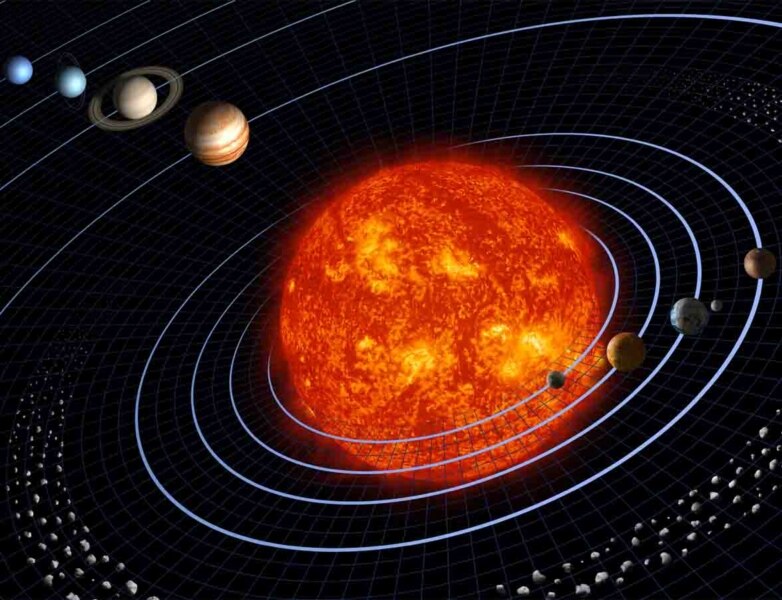
The heliocentric theory states that the sun is fixed at the center of the universe. The geocentric theory believes that earth is the center of the universe. The Catholic Church believes in the geocentric theory. The Trial of Galileo was about Galileo going against the bible and proving that the earth is not in the center of the universe. After the Catholic Church found out that Galileo was going against the bible they put him on trail in 1633. The Catholic Church labeled Galileo guilty and he was tortured in jail.
Saturday, October 3, 2009
Scientific Revolution: The Scientific Method
Scientific method is a series of steps that scientist use to solve a problem. Using the scientific method id an experiment the first step is to identify the problem or the question asked in the experiment. After you figure what you are trying to solve or figure out then you do a background check on your experiment. You make a hypothesis which is an educated guess n what you think would happen. Now you start your experiment collect data while you’re testing your experiment. After you collected data analyze the data and then draw a conclusion. Check if your hypothesis is true or false if it’s false write down what you did wrong. Finally you write your report on the experiment and what happened.
I think the scientific method is a really good method use to solve problem it help you out when you need do an experiment. It makes life easier for scientist especially
Friday, October 2, 2009
Evolution Vs. Creation
Charles Darwin the father of evolution made a theory that humans animals, and all living thing have evolve for other living things in the past. Natural selection is when species have traits that they use for their advantage. Ever generation they have more traits to help them survive.
My opinion on this is that I don’t believe in evolution I believe in creation everyone was created for a purpose. The reason why I believe in creation because am a Muslim and I was grown up to believe that there a god and he created everything on earth. I get how Darwin say that humans evolve from apes because we kind of look like them they have thumbs and there the only type of animals that have thumbs like humans. When I about how Darwin thinks we came from apes when they have small brains but us we have bigger brains than apes so we are smarter. Then you think harder about Darwin theory is good and bad at the same time.
Subscribe to:
Comments (Atom)